The complete guide
Traditional outdoor composting vs electric indoor composting: which to choose
With fourteen electric composters and one traditional tumbler in this collection, it's worth being honest about when each approach actually makes more sense.
The core trade-off: speed vs scale
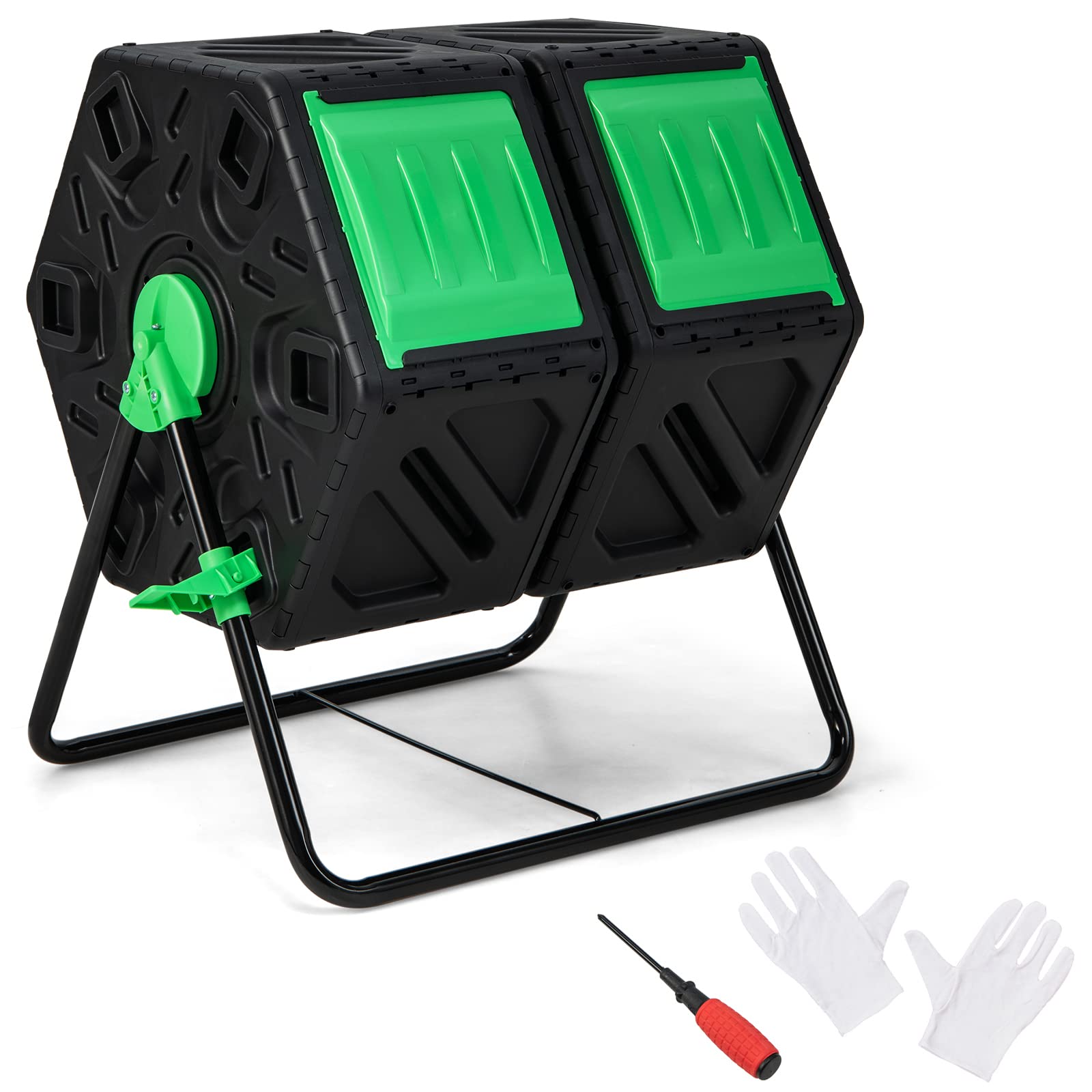
Electric composters process a load in hours and are built for kitchen-scale daily use — a few litres of scraps processed indoors, out of the weather, with a compact footprint. A tumbling composter like this one works at genuinely larger scale (130L combined across two chambers) but on a slower timeline: 4 to 6 weeks for a full cycle, faster in warm weather, longer in winter. If your priority is same-day turnaround for a small kitchen's daily scraps, electric wins clearly. If you're generating real volume — garden clippings and prunings alongside kitchen waste, or you simply produce more scraps than a 3–5L electric bucket can keep up with — the tumbler's scale is the better fit.
What the tumbler can process that electric units can't
Garden waste is the big one: grass clippings, leaves, small prunings and spent plants go into a tumbler alongside kitchen scraps, something no countertop electric unit is designed to handle. If you maintain a garden of any size, the tumbler absorbs that waste stream in a way an indoor appliance simply isn't built for.
No electricity, no filters, no running cost
Beyond the upfront price, a tumbling composter has essentially zero ongoing cost — no electricity, no carbon filters to replace, no motor to eventually wear out. The trade-off is manual effort: you turn the drum yourself periodically to keep decomposition moving, rather than a motor doing it automatically.
Where you actually need one to make sense
You need outdoor space — a garden, allotment, or a genuinely large, covered balcony — for a tumbler to work; it's not a kitchen or indoor appliance. If you live in a flat with no outdoor access, an electric unit is the only realistic option regardless of scale. If you do have a garden, many households run both: an electric unit for daily kitchen scraps processed quickly indoors, and a tumbler outside for garden waste and any surplus kitchen scraps the electric unit's smaller bucket can't keep up with.
Getting a 4-6 week cycle instead of 6 hours
Load the tumbler with a mix of "green" material (fresh kitchen scraps, grass clippings) and "brown" material (dried leaves, cardboard, twigs) rather than kitchen waste alone — the balance between the two is what actually drives decomposition speed in a traditional compost system, unlike an electric unit's heat-and-grind approach. Turn the drum every few days using the 360° rotation to keep oxygen moving through the mix, and expect faster results in warm weather than in winter.